Restorative yoga
Restorative practice uses support to reduce the effort needed to remain in a position. The placement of blankets, cushions or other props is part of the form.
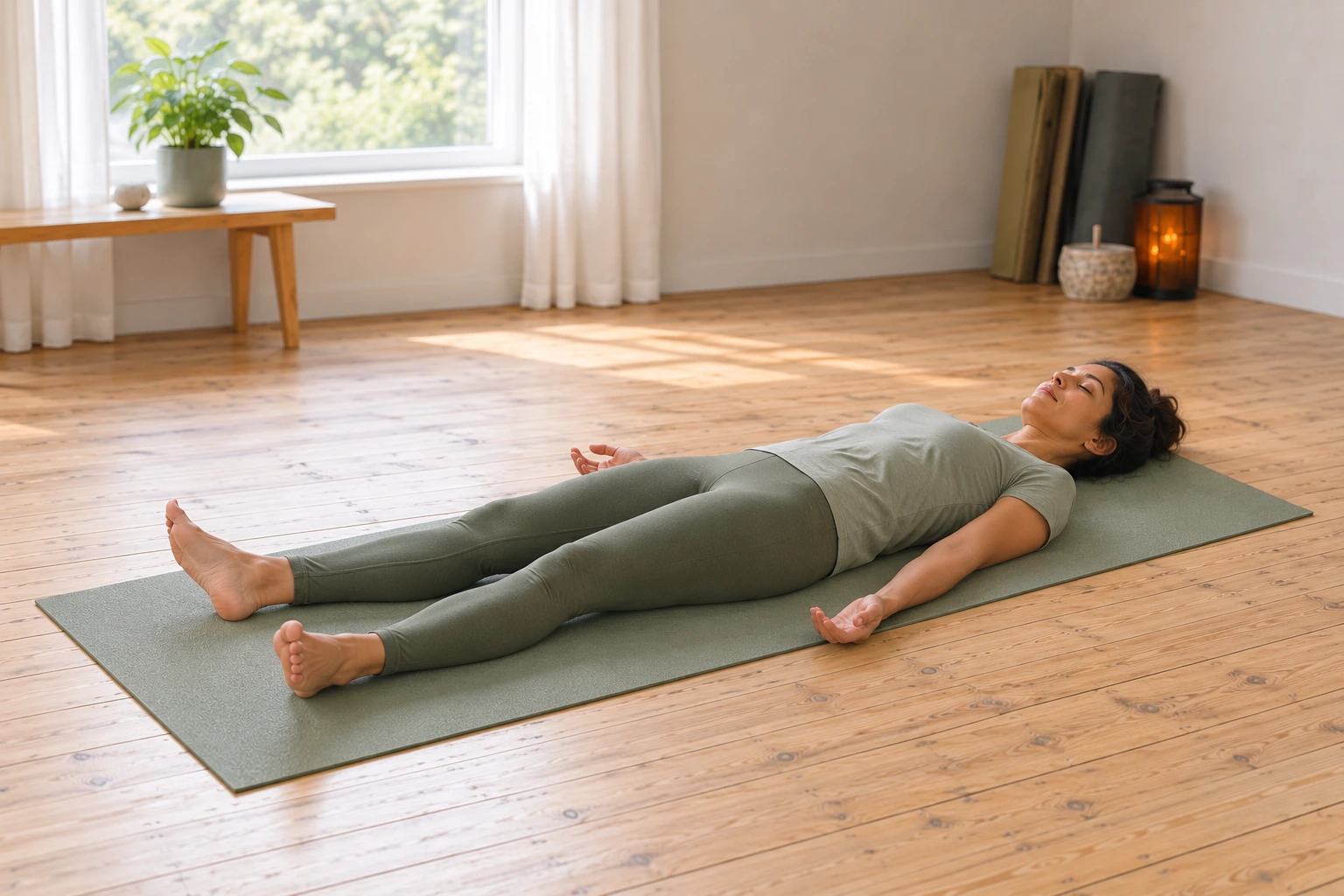
The Savasana example shows resting on the mat. A restorative version may add support; that setup needs its own instructions.
Related poses in the shared bank
Related shapeCompare variants
Letters such as A and B follow the labels on our pose pages. They are not a universal system across yoga traditions. Each image keeps the name of the form shown.
Savasana
A firm cushion supports both knees; the heels rest on the mat. Choose a comfortable height without pressure. The older description of Savasana does not specify this knee support.

Balasana


Do not force the knees or ankles. Keep the head comfortable and the airway clear. Stop for pain, numbness or restricted breathing. Seek individual advice if kneeling is unsuitable.
Read about these forms →Member · detail view
Older descriptions of individual poses
The older references document particular historical forms. They do not establish every modern variation, class sequence or teaching method.
- Gheraṇḍa Saṃhitā — translation by Sris Chandra Vasu (1895)2.41, p. 16; 2.43–44, p. 17 · Wellcome Collection
Practising with care
If you have an injury or a medical condition, take medication, are pregnant or breastfeeding, or have another circumstance that may affect your practice, consult a qualified healthcare professional about suitable activities and necessary adaptations.
Learn new and demanding poses with a qualified yoga teacher. Adapt the range to your body and stop if you feel pain or dizziness. A short video illustrates movement; its length does not prescribe how long to hold a pose.
Headstands, shoulder stands and lotus are not starting poses for beginners. Injuries, balance problems or glaucoma are examples of reasons to assess suitability individually. Do not force a bind or use the body as leverage against the knee.