Yoga forms
Explore the same pose families through different teaching traditions. Names, supports, breathing and transitions need to be compared separately.
Ashtanga yoga
A system of poses, transitions, breath and directed gaze. The six series belong to a living teaching tradition with variations between teachers.
Read about this approach →Hatha yoga
Hatha names a broad tradition of bodily yoga practice. Older texts discuss posture, breath and other disciplines. Today’s classes using this name can differ in content and pace.
Read about this approach →Iyengar yoga
Iyengar yoga pays detailed attention to how the body is placed. Supports such as blocks, belts and blankets can change the task and make a particular action easier to study.
Read about this approach →Vinyasa yoga
In vinyasa practice, transitions connect postures with breathing. The order, pace and selection of poses can vary between classes.
Read about this approach →Yin yoga
Yin practice uses comparatively still, longer-held positions. A familiar shape may have a different name, support or degree of muscular effort from an active yoga version.
Read about this approach →Restorative yoga
Restorative practice uses support to reduce the effort needed to remain in a position. The placement of blankets, cushions or other props is part of the form.
Read about this approach →Sivananda yoga
Sivananda teaching commonly places a set of twelve basic postures within a wider practice that includes preparation, breathing and rest.
Read about this approach →Understand the movement.
Find your form.
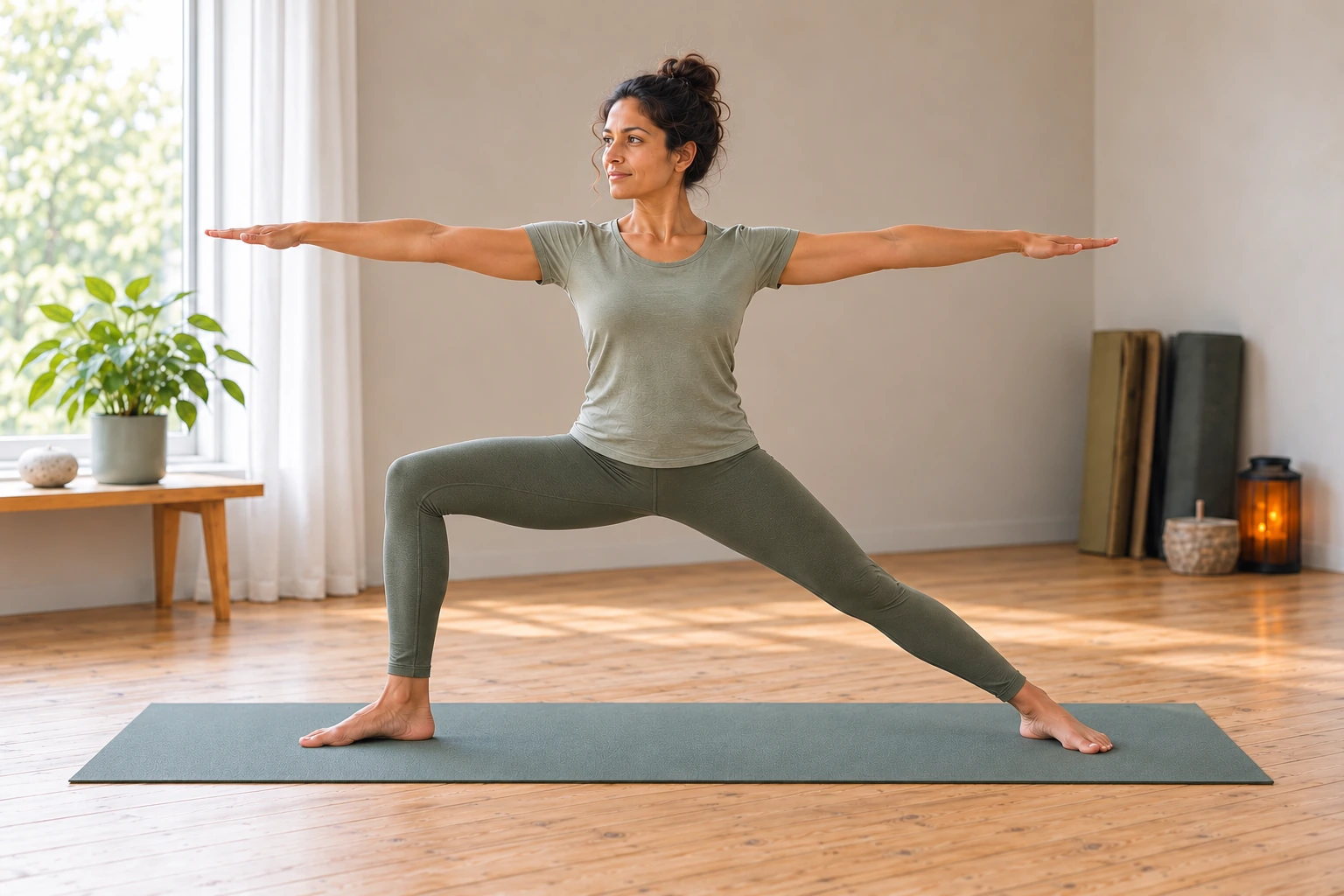
Tradition in context
Pose names and sequences are linked to named teaching traditions. Differences remain visible.
Understandable movement
Explanations follow support, weight and movement. Traditional terms remain distinct from anatomical and medical claims.
Sources to follow
You can follow the original material. A teacher’s method description documents a practice; it does not alone establish clinical benefit.