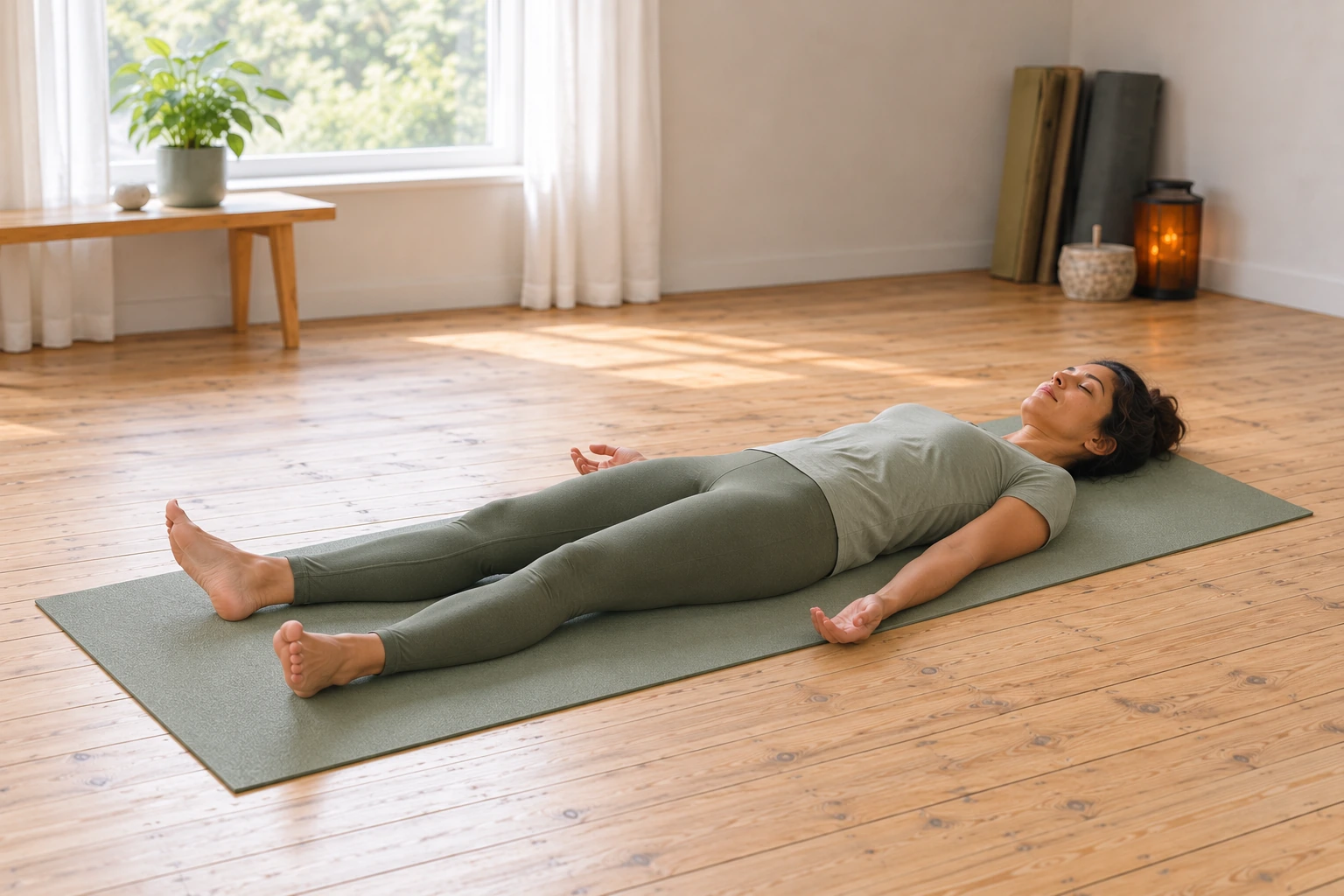
The shape of the pose
Relaxed supine rest closes the displayed sequence.
What happens in the body?
The mat supports the body and reduces active support demands compared with standing and balancing poses. Support under the knees or head can change how the back and neck rest. Rest need not look the same for everyone.
Adaptation and limits
This description identifies shape and context. Adaptations change the execution and should not be confused with every named variant in a traditional chart. Further teaching is needed to choose a suitable entry and exit.

A firm cushion supports both knees; the heels rest on the mat. Choose a comfortable height without pressure. The older description of Savasana does not specify this knee support.
Practising with care
If you have an injury or a medical condition, take medication, are pregnant or breastfeeding, or have another circumstance that may affect your practice, consult a qualified healthcare professional about suitable activities and necessary adaptations.
Learn new and demanding poses with a qualified yoga teacher. Adapt the range to your body and stop if you feel pain or dizziness. A short video illustrates movement; its length does not prescribe how long to hold a pose.
The pose in context
Haṭhayogapradīpikā 1.32 calls still supine lying Savasana and compares the body’s position to a corpse. The verse provides an older record of the name and basic position. It does not specify all spacing, supports or finishing routines used in present teaching.
Sources for this page
- Svātmārāma: Haṭhayogapradīpikā, with the Jyotsnā and Manobhilāṣiṇī commentaries (1895)1.32, p. 21 · Wellcome Collection
Yoga forms and variations
These links compare teaching contexts and related shapes. Read the named form, supports and limits on this page before using a position.