Sivananda yoga
Sivananda teaching commonly places a set of twelve basic postures within a wider practice that includes preparation, breathing and rest.
The shared bank links to related postures already explained here. It is not a complete Sivananda class, and similar names do not establish identical grips, supports or entry methods.
Related poses in the shared bank
Related shape
Sirsasana A
Headstand
Explore this pose →Member · detail view
Salamba Sarvangasana
Supported shoulderstand
Explore this pose →Member · detail view
Halasana
Plough
Explore this pose →Member · detail view
Matsyasana · Lotus
Fish
Explore this pose →Member · detail view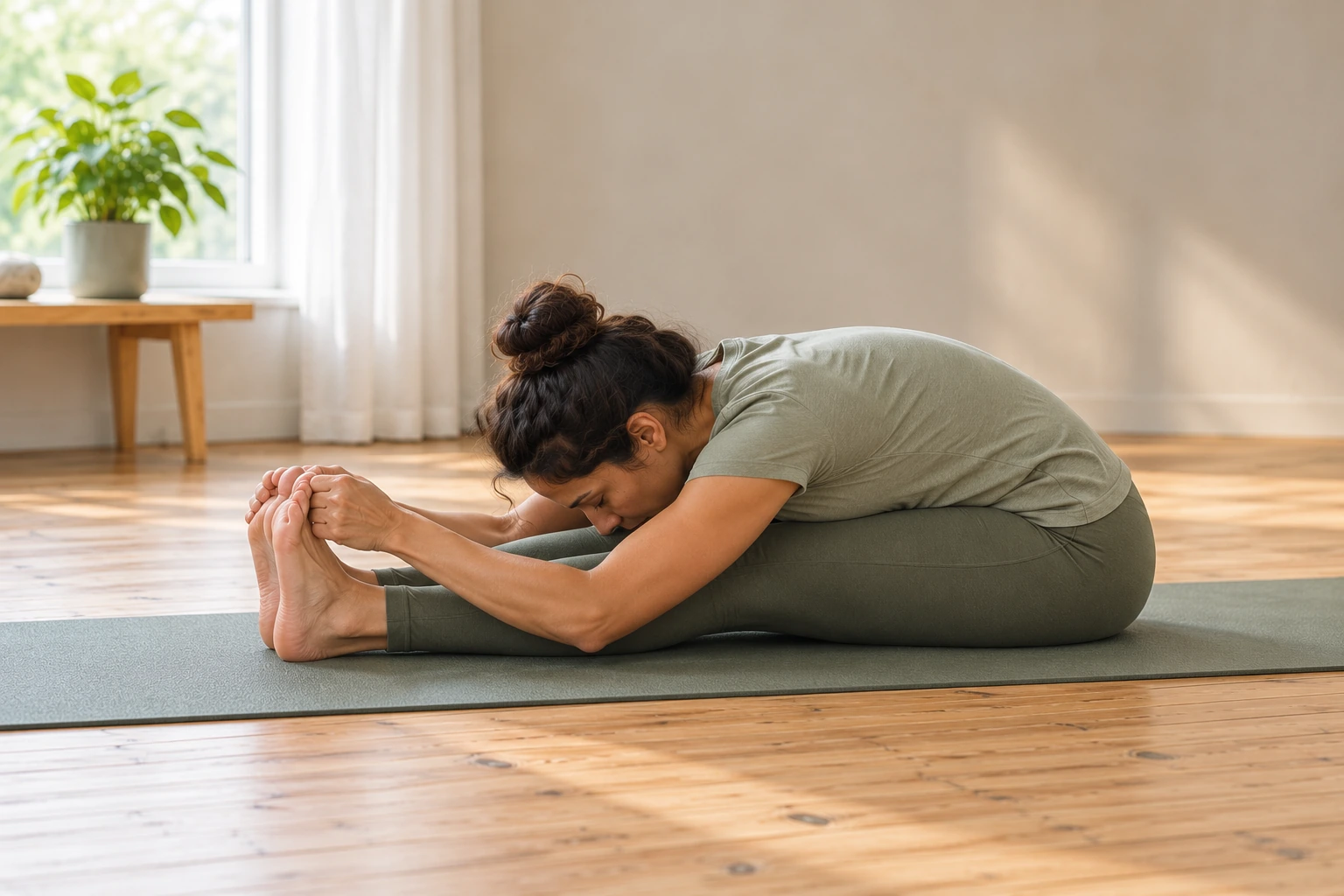
Paschimottanasana A
Seated forward fold
Explore this pose →Free example
Salabhasana A
Locust
Explore this pose →Member · detail view
Dhanurasana
Bow
Explore this pose →Member · detail view
Ardha Matsyendrasana
Half lord-of-fishes twist
Explore this pose →Member · detail view
Padahastasana
Hands under feet
Explore this pose →Member · detail view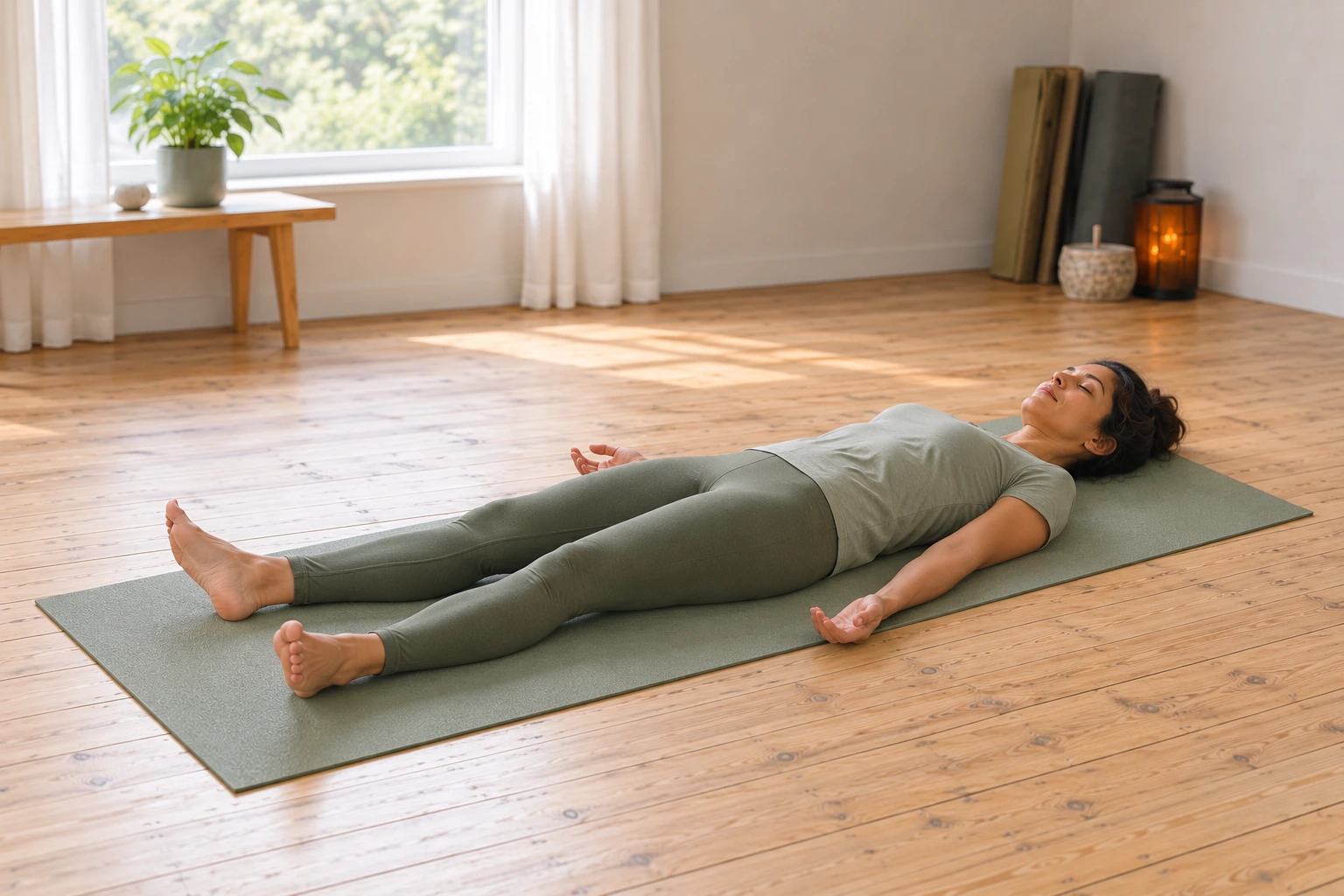
Savasana
Reclining rest
Explore this pose →Free example
Bhujangasana · Bent elbows
Cobra
Explore this pose →Member · detail view
Makarasana · Head on folded arms
Crocodile
Explore this pose →Member · detail view
Vajrasana · Seated on heels
Kneeling seat
Explore this pose →Member · detail viewOlder descriptions of individual poses
The older references document particular historical forms. They do not establish every modern variation, class sequence or teaching method.
- Gheraṇḍa Saṃhitā — translation by Sris Chandra Vasu (1895)2.41, p. 16; 2.43–44, p. 17; 2.13, p. 12 · Wellcome Collection
Practising with care
If you have an injury or a medical condition, take medication, are pregnant or breastfeeding, or have another circumstance that may affect your practice, consult a qualified healthcare professional about suitable activities and necessary adaptations.
Learn new and demanding poses with a qualified yoga teacher. Adapt the range to your body and stop if you feel pain or dizziness. A short video illustrates movement; its length does not prescribe how long to hold a pose.
Headstands, shoulder stands and lotus are not starting poses for beginners. Injuries, balance problems or glaucoma are examples of reasons to assess suitability individually. Do not force a bind or use the body as leverage against the knee.