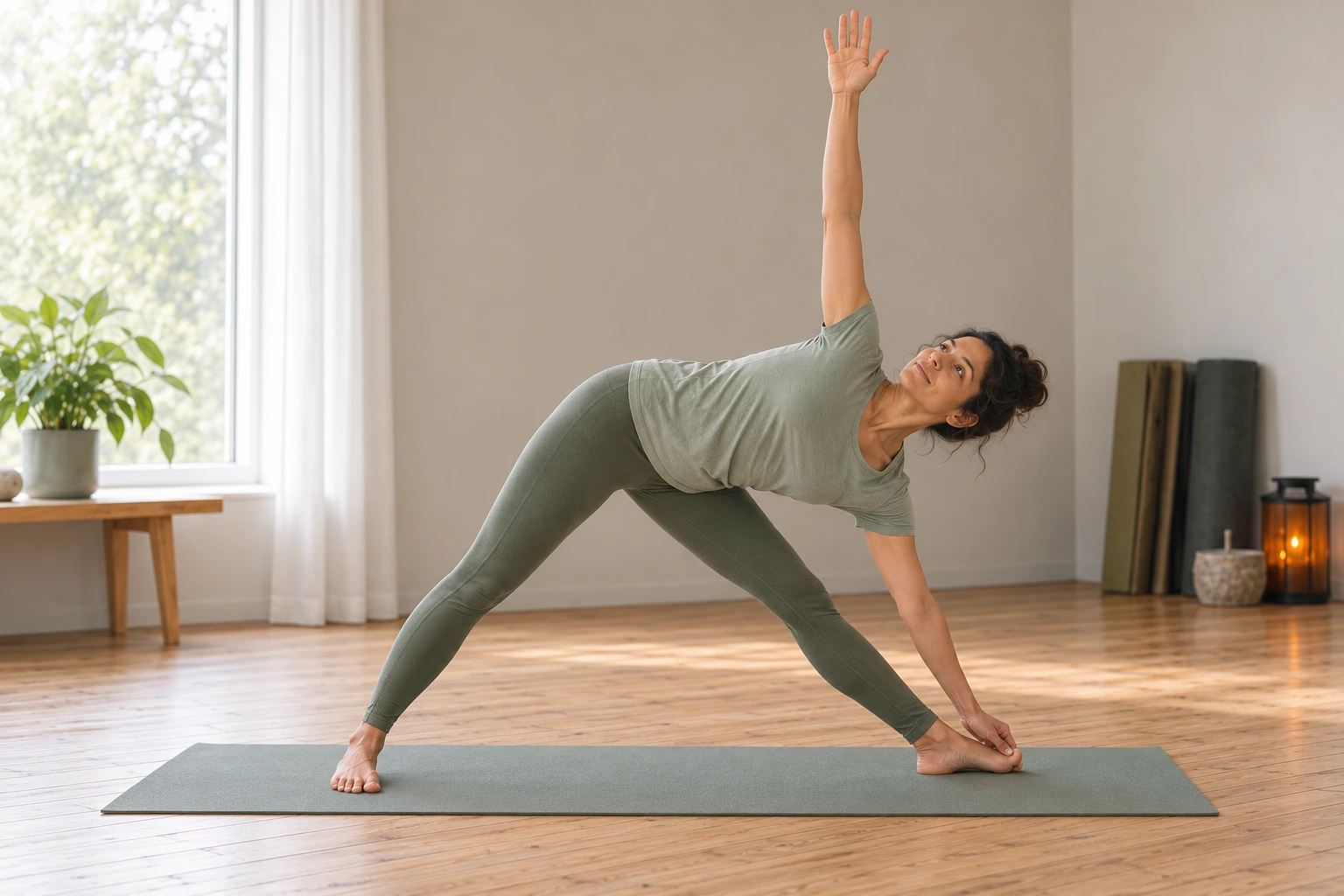
The shape of the pose
A standing lateral shape with straight legs.
Both legs extend in a wide stance. The torso leans over the front leg, the same-side hand holds its big toe and the other arm reaches upward. The gaze follows the raised hand.
What happens in the body?
The wide stance provides lateral support as the trunk leans over the front leg. A higher hand support reduces how far the torso must reach. Rotation and side bending vary with the chosen form; the hand’s distance from the floor does not determine whether a pose suits the person.
Adaptation and limits
This description identifies shape and context. Adaptations change the execution and should not be confused with every named variant in a traditional chart. Further teaching is needed to choose a suitable entry and exit.

The block supports the palm of the lower hand, reducing the reach required. Keep both feet grounded and do not force the knees. This support is a contemporary adaptation.
Practising with care
If you have an injury or a medical condition, take medication, are pregnant or breastfeeding, or have another circumstance that may affect your practice, consult a qualified healthcare professional about suitable activities and necessary adaptations.
Learn new and demanding poses with a qualified yoga teacher. Adapt the range to your body and stop if you feel pain or dizziness. A short video illustrates movement; its length does not prescribe how long to hold a pose.
Headstands, shoulder stands and lotus are not starting poses for beginners. Injuries, balance problems or glaucoma are examples of reasons to assess suitability individually. Do not force a bind or use the body as leverage against the knee.
Yoga forms and variations
These links compare teaching contexts and related shapes. Read the named form, supports and limits on this page before using a position.