The shape of the pose
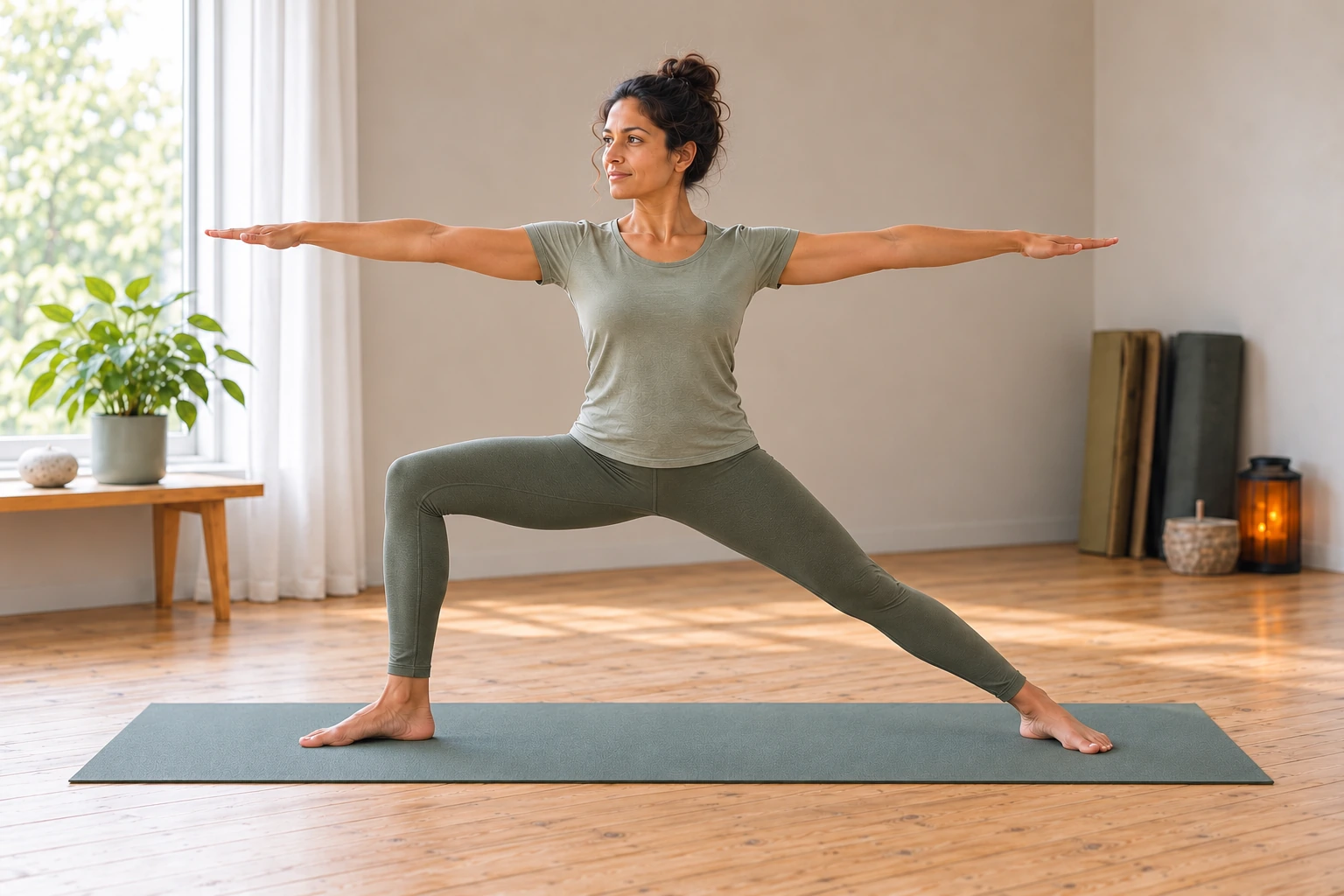
A wide standing pose with the front knee over the ankle, front thigh approximately parallel to the floor and arms extended to the sides.
In the illustrated full form, the front knee is above the ankle and points in the same direction as the foot. The front thigh is approximately parallel to the floor, the back leg extended and the torso upright over the pelvis. Arms extend sideways at shoulder height and the gaze follows the front hand. The stance needs to allow this without the knee turning inward.
What happens in the body?
The wide stance and bent front leg require hip and thigh muscles to keep the body over the feet. Front and back legs have different roles and need not feel the same. Adjust stance and depth instead of forcing the body to match an image.
Adaptation and limits
This description identifies shape and context. Adaptations change the execution and should not be confused with every named variant in a traditional chart. Further teaching is needed to choose a suitable entry and exit.
Practising with care
If you have an injury or a medical condition, take medication, are pregnant or breastfeeding, or have another circumstance that may affect your practice, consult a qualified healthcare professional about suitable activities and necessary adaptations.
Learn new and demanding poses with a qualified yoga teacher. Adapt the range to your body and stop if you feel pain or dizziness. A short video illustrates movement; its length does not prescribe how long to hold a pose.
Headstands, shoulder stands and lotus are not starting poses for beginners. Injuries, balance problems or glaucoma are examples of reasons to assess suitability individually. Do not force a bind or use the body as leverage against the knee.
Yoga forms and variations
These links compare teaching contexts and related shapes. Read the named form, supports and limits on this page before using a position.