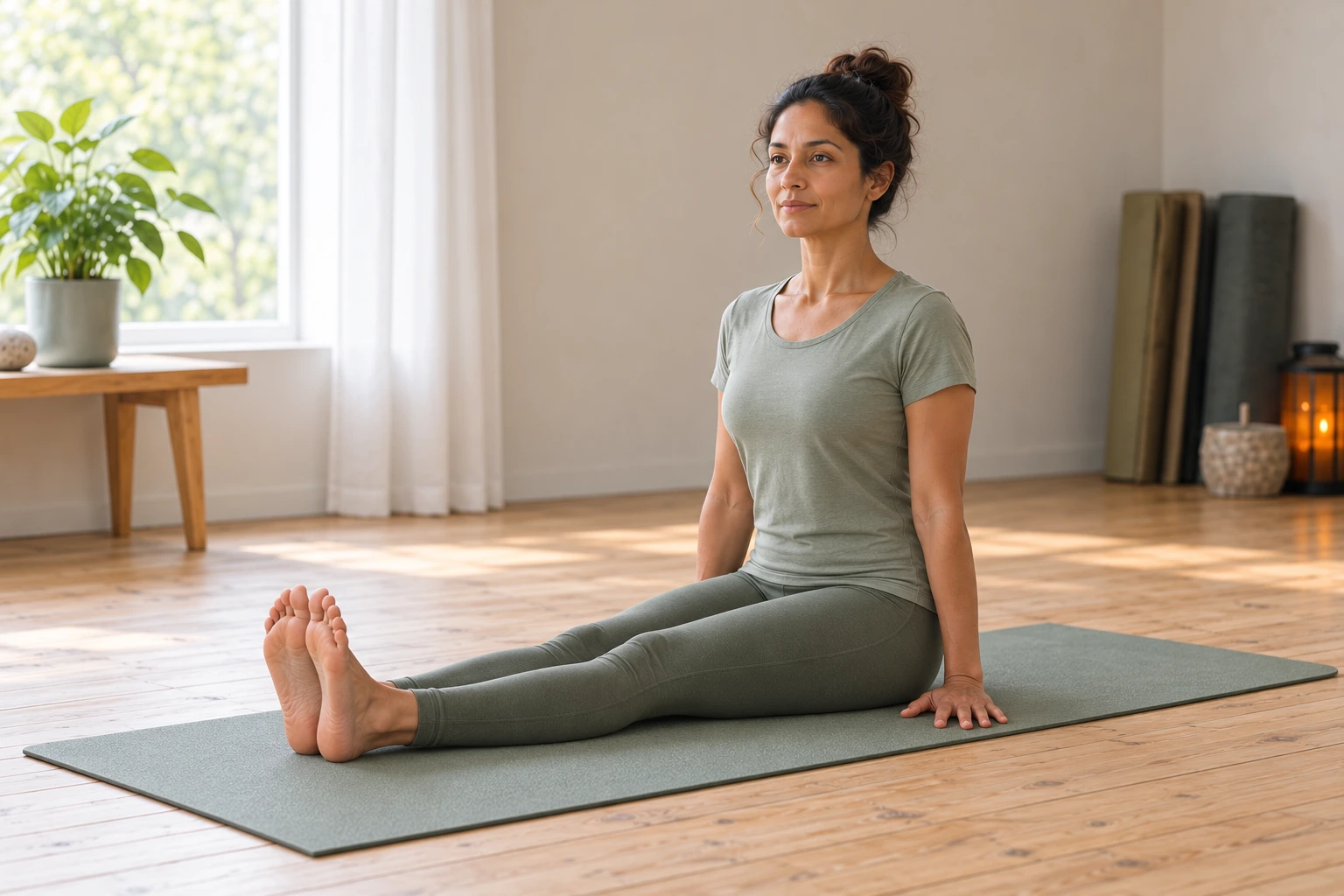
The shape of the pose
Upright sitting with the legs extended forward.
What happens in the body?
The sitting bones meet the mat while pelvis and back keep the torso upright. Tension behind the thighs can pull the pelvis back. A raised seat or slightly bent knees can give the pelvis room to move without forcing the back straight.
Adaptation and limits
This description identifies shape and context. Adaptations change the execution and should not be confused with every named variant in a traditional chart. Further teaching is needed to choose a suitable entry and exit.
Place the hands beside the hips, extend the heels forward and draw the toes back.
Practising with care
If you have an injury or a medical condition, take medication, are pregnant or breastfeeding, or have another circumstance that may affect your practice, consult a qualified healthcare professional about suitable activities and necessary adaptations.
Learn new and demanding poses with a qualified yoga teacher. Adapt the range to your body and stop if you feel pain or dizziness. A short video illustrates movement; its length does not prescribe how long to hold a pose.
Yoga forms and variations
These links compare teaching contexts and related shapes. Read the named form, supports and limits on this page before using a position.